
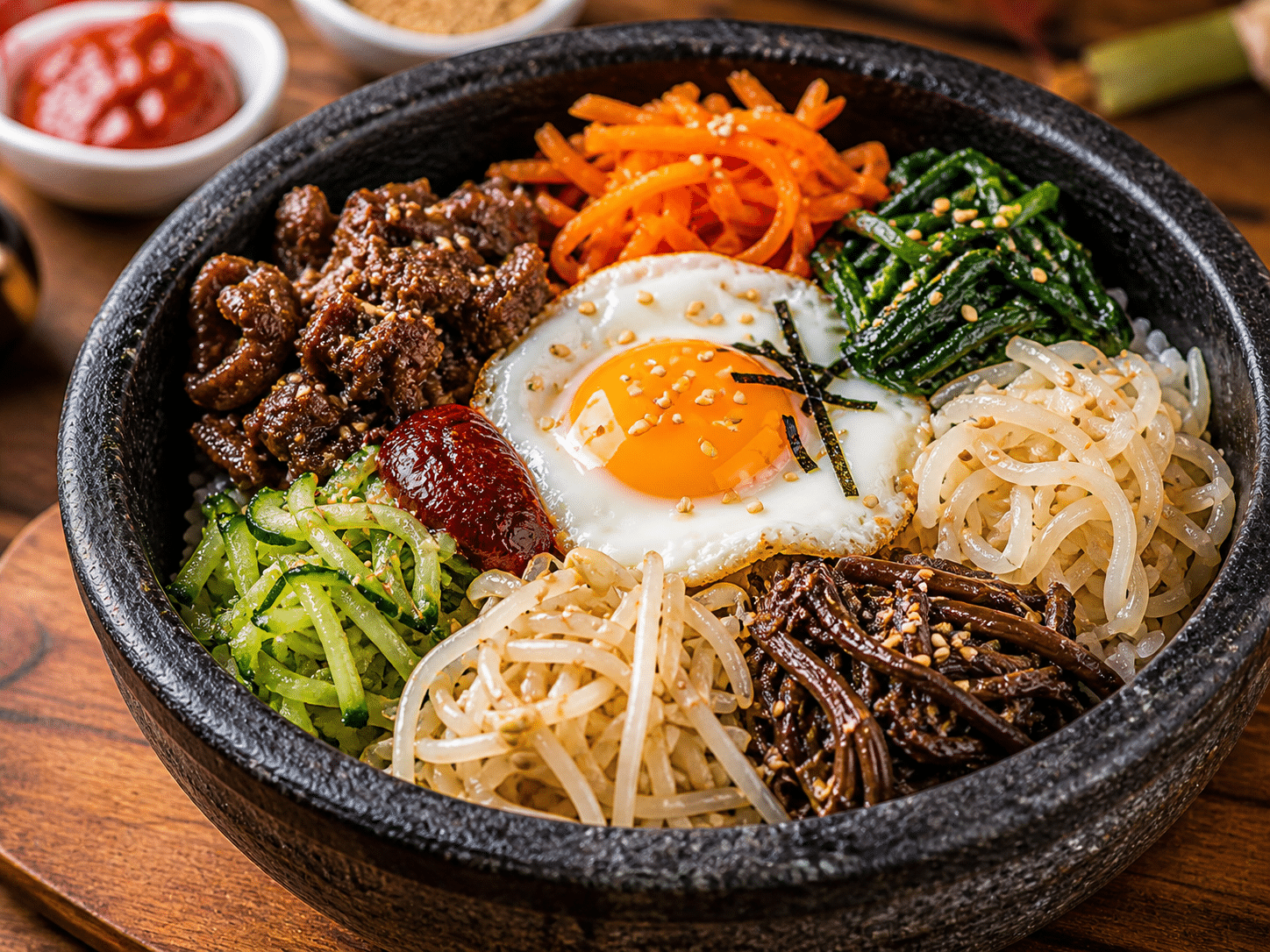
I make bibimbap when I want something that feels both homey and a little celebratory. This version highlights two assertive roots, fernbrake (gosari) and dried bellflower root (doraji), rehydrated and seasoned so their textures stand up to rice and gochujang.
Why You’ll Love This Recipe
- Layered textures with tender fernbrake and slightly crisp doraji
- Deep savory seasoning from soy and garlic with bright sesame notes
- Easy to scale for a weeknight meal or a communal bowl
I still remember my first bowl with a runny egg and a spoonful of gochujang that made everything click. It rediscovered the thing I like about bowls – every bite is a little different.
Ingredients
- 1 ounce dried bellflower roots (doraji), soaked in cold water for 18 to 24 hours, rehydrates to tender texture, soak long so pieces are not woody
- 1/2 ounce dried fernbrake (gosari) or about 4 ounces fresh/presoaked fernbrake, cooks into a meaty, earthy green, rehydrate or buy fresh for less waiting
- 4 eggs, fried sunny side up to add silk and richness to each bowl
- kosher salt, for gentle seasoning, use sparingly with soy sauce
- vegetable oil, for high heat frying, choose a neutral oil with a high smoke point
- toasted sesame oil, finish for aroma and depth, a little goes a long way
- toasted sesame seeds, for crunch and nutty flavor, toast briefly if not pre-toasted
- garlic, minced, adds savor and bright aromatics, use fresh for best flavor
- soy sauce, for umami backbone, low-sodium options let you control salt
- honey or sugar, for a touch of balance, use honey if you like floral notes
- Korean hot pepper paste (gochujang), for heat and fermented depth, add to taste
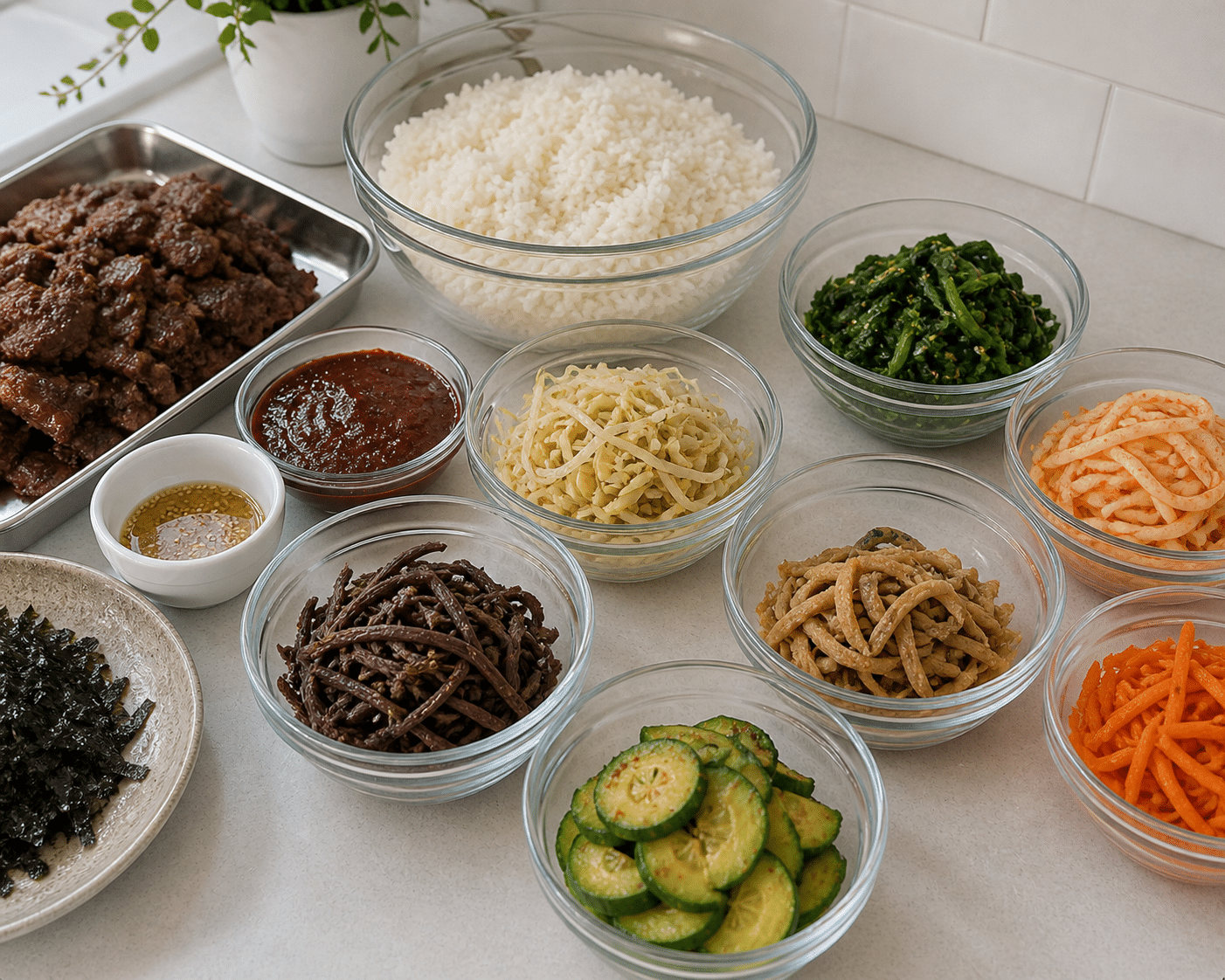
Step-by-Step Instructions
- If your fernbrake is fresh or already presoaked, use it straight away. If it is dried, rinse 1/2 ounce of dried gosari under cold water to remove dust. Place it in a pressure cooker with about 5 cups of water, seal, and cook at high pressure for 30 minutes. If you do not have a pressure cooker, simmer covered for 60 to 90 minutes until tender. This softens fibers without adding salt.
- Drain the cooked fernbrake and rinse under cold water to stop the cooking. Drain well and squeeze gently to remove excess water. You should end up with about 4 ounces of cooked fernbrake. If it feels too tough, simmer a little longer rather than over-salting.
- For the doraji, after soaking 1 ounce of dried bellflower roots in cold water for 18 to 24 hours, drain and squeeze out excess water. Taste a small piece to check tenderness. If it feels firm, simmer gently for 5 to 10 minutes, then drain. Proper soaking is key to avoid woody texture.
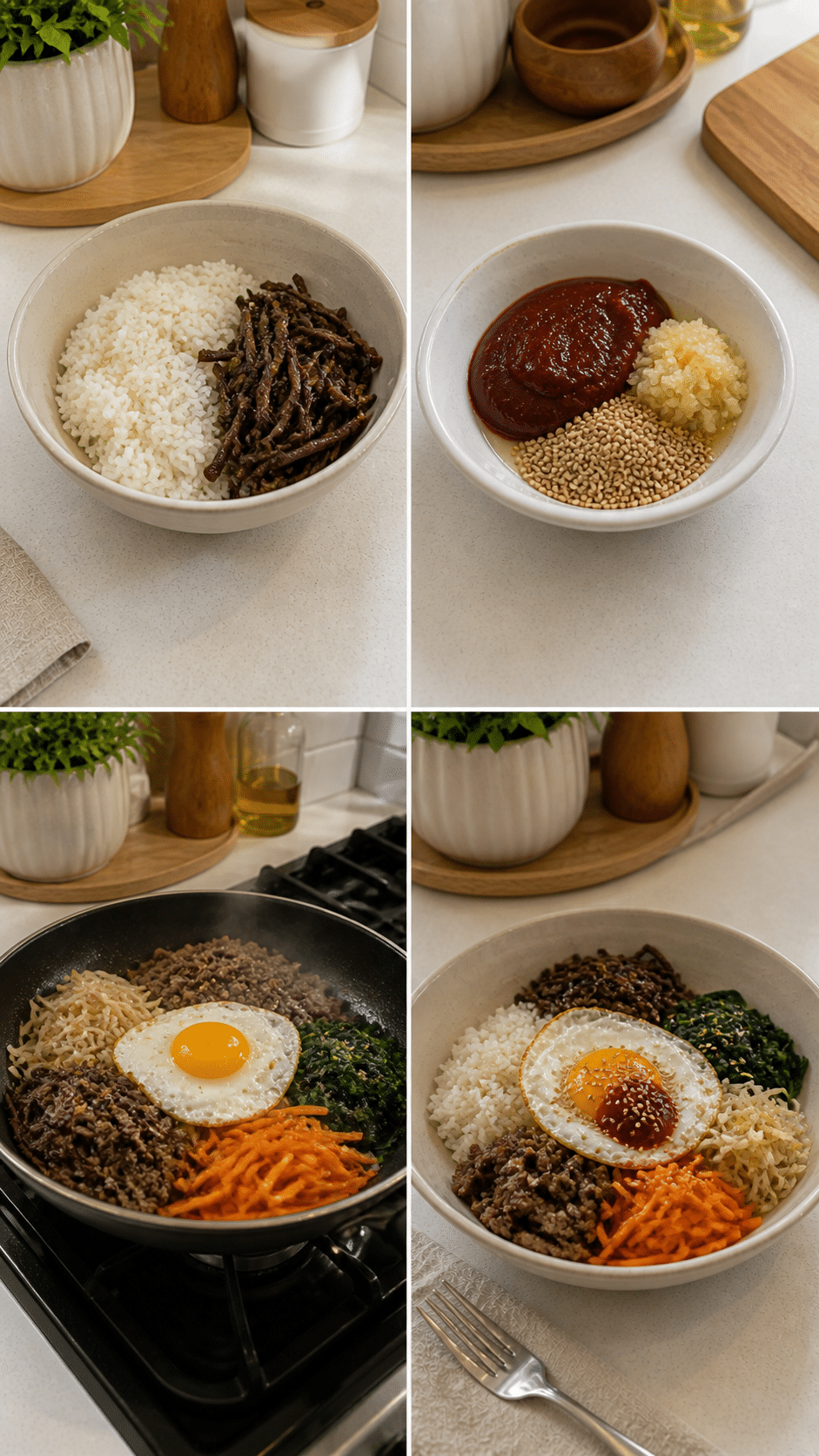
- Make the seasoning sauce in a small bowl: 1 to 2 teaspoons soy sauce, 1 teaspoon toasted sesame oil, 1 clove minced garlic, and 1/2 teaspoon honey or sugar. Toss the drained fernbrake with a portion of the sauce and do the same with doraji in a separate bowl. Aim for light coating so vegetables stay separated on the platter and do not become soggy.
- Heat a tablespoon of vegetable oil in a skillet over medium-high heat until shimmering. Stir-fry the seasoned fernbrake for 1 to 2 minutes until heated through and glossy. Remove and keep on a platter. Repeat with doraji for 1 to 2 minutes. Work quickly so vegetables retain texture.
- Wipe the skillet, add a teaspoon of vegetable oil per egg, and heat to medium. Crack each egg into the pan and cook sunny side up until whites are fully set but yolks remain runny, about 2 to 3 minutes. For slightly firmer yolks cover the pan for 20 to 30 seconds. Season with a light pinch of kosher salt.
- Assemble by dividing hot steamed rice between bowls. Artistically arrange fernbrake, doraji, and any other vegetables you like on top of the rice. Place the fried egg in the center. Sprinkle toasted sesame seeds and drizzle a small amount of toasted sesame oil.
- Serve with gochujang on the side so diners can add 1 to 2 teaspoons to taste. Mix thoroughly at the table so rice becomes coated and the flavors mingle. Taste and adjust with a splash of soy or a pinch of sugar if needed.
- Timing and mistakes to avoid. Soaking doraji for the full 18 to 24 hours is essential. Do not over-salt during seasoning because soy sauce concentrates salt. If fernbrake is still chewy after pressure cooking, simmer longer instead of over-salting.
Bibimbap with Fernbrake and Dried Bellflower Roots
- Total Time: 18 to 24 hours 30 mins
- Yield: 2–4 servings 1x
Description
Korean bibimbap featuring fernbrake (gosari) and dried bellflower roots (doraji).
Ingredients
- 1 ounce dried bellflower roots (doraji), soaked in cold water for 18 to 24 hours
- 1/2 ounce dried fernbrake (gosari), or equivalent fresh/presoaked
- 4 eggs
- Kosher salt
- Vegetable oil
- Toasted sesame oil
- Toasted sesame seeds
- Garlic
- Soy sauce
- Honey (or sugar)
- Korean hot pepper paste (gochujang)
Instructions
- If using presoaked or fresh fernbrake you can use it straight away; if using dried fernbrake (gosari) prepare it first.
- To prepare dried fernbrake in a pressure cooker: wash 1/2 ounce dried gosari and pressure-cook with 5 cups of water for 30 minutes.
- After cooking, drain and rinse the fernbrake in cold water a couple of times, then drain; it should yield about 4 ounces.
- Soak 1 ounce dried bellflower roots (doraji) in cold water for 18 to 24 hours before using.
- Prepare any other vegetables you plan to use and arrange each on a large platter as they are ready to use for an attractive presentation.
- When all vegetables are prepared, cook the eggs to your preference and season with kosher salt; heat vegetable oil as needed for frying.
- Assemble bibimbap in shallow bowls or in a hot stone/earthenware bowl (dolsot) and finish with toasted sesame oil, toasted sesame seeds, and sauce made from garlic, soy sauce and honey (or sugar); serve gochujang on or alongside each bowl to taste.
- Serve immediately and enjoy.
- Prep Time: 18 to 24 hours (soaking) + active prep
- Cook Time: 30 mins (pressure-cook fernbrake)
You Must Know
- High in fiber and plant minerals from fernbrake and doraji
- Flexible for lunch or dinner and easy to scale for guests
- Great for batch prepping the vegetables and assembling quickly
When I was a kid, my family spread each vegetable on a big platter before we ate, and arranging it felt like a small ritual. My favorite ingredient to highlight is toasted sesame oil because its aroma gives the bowl instant familiarity.
Storage tips
Leftover seasoned fernbrake and doraji keep well in the fridge for 3 to 4 days in an airtight container. Store rice separately to prevent sogginess and reheat briefly in a covered skillet or microwave with a sprinkle of water.
Ingredient substitutions
If you cannot find dried doraji use fresh bellflower root if available or substitute with lightly blanched king oyster mushroom slices for similar chew. For fernbrake swap in blanched spinach or sautéed shiitake to keep the earthy profile.
Serving suggestions
Serve bibimbap with small bowls of kimchi, pickled cucumbers, and a side of clear soup. For a sizzling dolsot-bibimbap use a hot stone or cast iron bowl and heat lightly oiled bowl until very hot, then add rice and toppings for a crisp bottom.
Cultural notes
Bibimbap is a classic Korean mixed rice dish that celebrates balance between rice, vegetables, protein, and sauce. To learn more about its history see the Wikipedia entry on bibimbap: https://en.wikipedia.org/wiki/Bibimbap. For nutrition breakdowns of vegetables visit the USDA website: https://www.usda.gov/.
Pro Tips
- Rehydrate doraji in cold water to preserve subtle flavor and avoid hot soaking
- Season vegetables lightly and taste before adding more soy or salt
- Fry eggs in neutral oil then finish with sesame oil for aroma
- Keep toppings separate on a platter for a colorful presentation
- If making dolsot-bibimbap preheat your bowl to very hot, but be careful when handling
Final thought: I hope this guide helps you make a bibimbap that feels personal and balanced. Enjoy building your bowl and savoring small contrasts in each bite.
More recipes and tips are available at my site https://recipes.taskuptools.com/ and the technique notes above will help even beginner cooks get confident with roots and dried greens.